Guide · Read a forecast
Offshore, onshore, side-shore: the wind
The wind changes the shape of a wave faster than anything else. The three winds, why strength counts as much as direction, and why dawn exists.
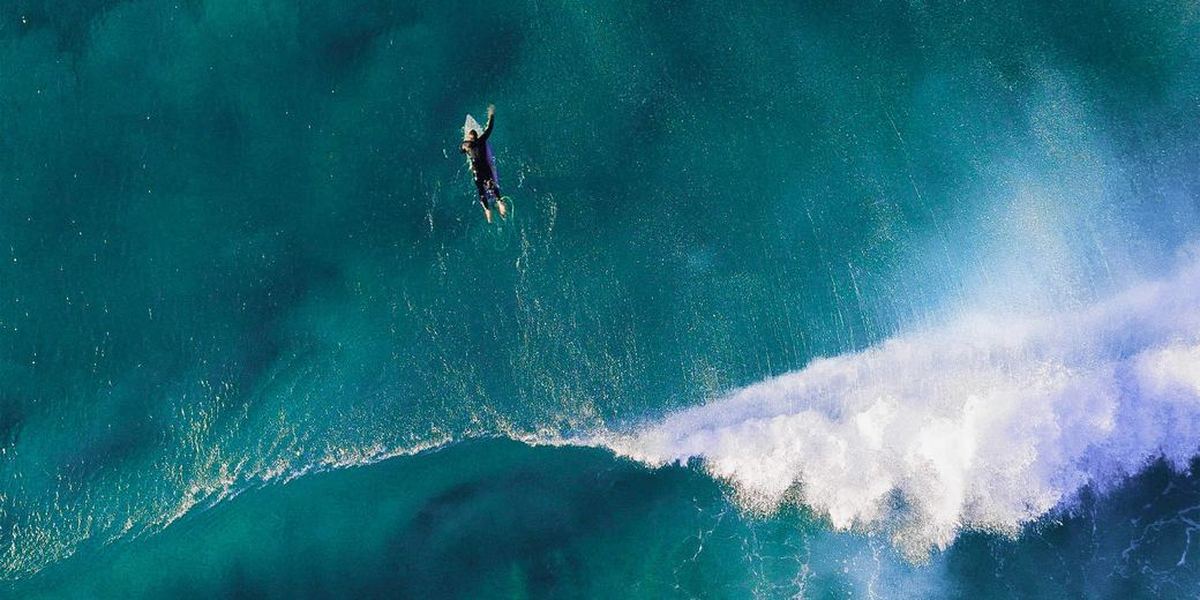
The three winds
| Wind | Blows from | On the wave |
|---|---|---|
| Offshore | The land, out to sea. | Holds the wave up and cleans the face. The lip stays open longer. |
| Onshore | The sea, toward the land. | Crumbles the wave. It breaks early, soft and choppy. |
| Side-shore | Along the beach. | Neither clean nor ruined. |
From the beach, you can spot an offshore wind: the spray lifts off the back of the breaking wave and goes out to sea.
It depends on the spot
The same wind is offshore on one beach and onshore on the one next door, facing another way. A forecast gives the direction the wind comes from: W means the wind comes from the west. Then turn to face the sea. Offshore blows in your back.
Strength counts as much
A light offshore is the best wind there is. A strong one is another story. Paddling gets hard, the spray hits you in the face, and the wave can stand so tall that it refuses to break. On a small wave, a strong offshore can even stop it from breaking at all.
The same goes for the other side. A light onshore at dawn can be fine. A strong onshore turns clean lines into chop.
Several days of onshore wind also raise a wind swell of their own, short and messy. The forecast shows a good height, and the sea is a mess. The period tells them apart.
The sea breeze, and why dawn exists
In the day, the land warms faster than the sea. The air over the land rises. Cooler air from the sea comes in to replace it: that is the sea breeze. It blows from the sea to the land, mostly in the afternoon. Source: Météo-France.
Before it picks up, the wind is often lighter. That is why the dawn patrol exists. It is not a law: clouds, a low, or the relief of the coast can change it all. Watch your own spot over a few weeks.
Reading the wind on a forecast
- Direction. Read the letter, then compare it with the way your spot faces.
- Strength. Light or strong, offshore or not. Both count.
- Hour by hour. Find the hours where the wind is light or offshore, usually early.
- Then the period, on those hours only.
Windguru, Windy and Surfline each show the wind in their own way. How to read a surf forecast covers the rest.
In Corail, each session logs its wind on its own, so you learn which wind works at your spot. Keep a surf log shows how.